Op-Ed: Why Priory Needs More Late-Night Bus Routes
At 11:20 on a Tuesday, the sidewalk outside Priory General fills with people in scrubs. Some are picked up. Some order rides they can't really afford. And a fair number start walking — up Mill Street, over the bridge, out toward the Eastside — because the last bus left downtown hours earlier.
That walk is the whole argument in miniature. Priory has grown into a town with a hospital that runs around the clock, kitchens that close at midnight and a downtown that's busier at nine than it was at five. Our transit schedule still belongs to a smaller, earlier town.
Keeping a handful of buses running late would be one of the cheapest, most effective things this city could do for safety, for workers and for the streets we've spent years trying to bring back to life.
A schedule built for a town that no longer exists
Most of our routes wind down in the early evening. For anyone who works a standard day and drives, that's invisible. For anyone who doesn't, it's the difference between a job and no job. A dishwasher whose shift ends at 11 is not a transit rider after 11. Neither is a nurse coming off a twelve-hour rotation, or a student leaving the library at closing.
The result is a quiet sorting mechanism. People with cars take the late shifts. People without them trade down to daytime hours, turn down overtime, or stop applying altogether. Nobody writes a memo about this. It just happens, shift by shift.
Safety comes first, and it isn't a theory
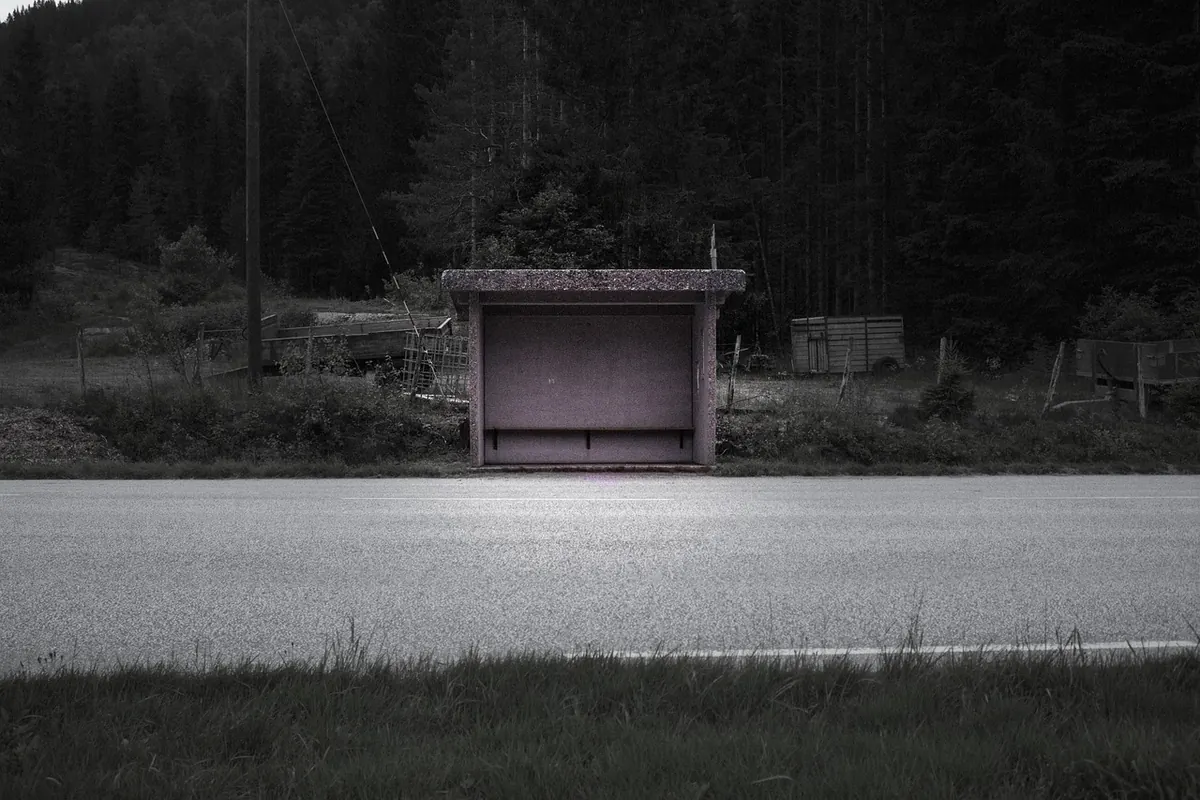
Walk the route from downtown to the Eastside after dark and you'll pass long stretches with no sidewalk, spotty lighting and very few people. Add ice, or rain, or a phone at four percent. That's the trip we're asking people to make because a bus stopped running before their shift did.
A bus isn't a cure for every risk, and nobody should pretend otherwise. But a lit vehicle with a driver and other passengers waiting at a marked stop is a world apart from a mile of dark road alone. Late service also gives people a way home from a bar or a party that doesn't involve guessing whether they're fine to drive.
The safest trip home is the one nobody has to walk.
The workers who pay for an early shutdown
This isn't an abstract group. These are the people whose hours sit outside the nine-to-five:
- Nursing assistants, lab techs and cleaning crews on evening or overnight hospital rotations
- Line cooks, dishwashers and bar staff who close up after the last table leaves
- Grocery and pharmacy workers restocking shelves after the doors lock
- Warehouse and logistics crews on second shift
- Students taking evening classes or working part-time jobs to stay enrolled
Employers in these sectors will tell you the same thing: the hardest shifts to fill are the ones that end when the buses aren't running. Late service isn't a subsidy to riders so much as a piece of infrastructure that makes those jobs possible in the first place. It widens the pool of applicants, and it makes it less likely that a good employee quits because getting home is exhausting.
Downtown gets a second act
We've spent real money on downtown — wider sidewalks, new lighting, festival seating, a push for more apartments above the storefronts. All of it helps. None of it changes the fact that a couple deciding whether to catch the late show has to ask who's driving, and a restaurant owner thinking about a second seating has to ask how the staff gets home.
Late buses don't create nightlife on their own. But they remove a ceiling on it. They let a concert let out and a crowd disperse without a scramble for parking. They let the person who had two beers leave the car at home. They make it possible for a downtown resident without a vehicle to go out in their own neighborhood after 8 p.m., which is a fairly basic thing to want from a city.
What late service should actually look like
This doesn't require running every route until 2 a.m. It requires being deliberate. A workable start:
- Pick two or three corridors, not the whole map. The busiest routes — the ones along Mill Street, River Road and up through Northgate — carry the most late-shift workers and the most downtown traffic.
- Build around one downtown transfer point. If the last buses of the night meet in the same place at the same time, one driver can hand a rider to another. If they don't, a late network is just isolated routes that happen to be dark.
- Choose honest headways. Every 30 to 45 minutes is fine. A bus you can predict beats a bus that comes whenever.
- Time the last run to the real end of the night — hospital shift changes, restaurant close, venue let-out — rather than to a number that looked tidy on a spreadsheet years ago.
- Make the information obvious. Posted schedules at stops, accurate live arrival times, and a plain-language map. If riders can't tell whether the last bus already passed, they won't risk it twice.
The money question, answered honestly
Fares won't pay for late-night service, and pretending otherwise wastes everyone's time. But the cost is smaller than the argument assumes, because the biggest expense — vehicles and drivers — is partly covered by spreading shifts and using the fleet that already exists. The gap is real, though, and it should be filled openly.
There are a few legitimate places to look. Large employers with late shifts — the hospital, the college, the distribution centers — already spend money on parking, shuttles and recruiting. A pass program or a per-employee contribution is often cheaper for them than the turnover they're living with. Downtown business associations have a direct interest in getting customers home. And a one-year pilot funded through the transit budget, with ridership counted honestly and published, is a reasonable ask for a city this size.
Two conditions matter. First, the pilot should be judged on whether people ride it — and people ride late buses when the routes go where the jobs are, not where the map is easiest to draw. Second, the numbers should be public. If late service works, we'll want the evidence. If a route doesn't, we should be willing to move it rather than defend it.
How to push this from a gripe to an agenda
Complaining about the last bus in a group chat changes nothing. A few concrete moves do:
- Write to your council member and the transit board with a specific ask: a late-night pilot on two named corridors, with a start date.
- Ask your employer — especially if you work evenings — to put a letter behind it. Employers carry more weight on transit decisions than residents usually realize.
- Show up at the budget session. Five people speaking for three minutes each is a different signal than one email.
- If you already drive a late shift, mention it. Tell them what it costs you in gas, in time, in sleep.
- Volunteer to help count riders during the pilot. Good data ends arguments that opinions can't.
Priory is not a sleepy town anymore, and it shouldn't behave like one after sunset. A bus that runs at 11:30 isn't glamorous. It won't make a ribbon-cutting photo. It will get a nurse home, keep a cook employed, put a few more people on a downtown sidewalk, and take a few cars off the road at exactly the hour when that matters most. That's a decent return on a schedule change.
Photo: iverdaa / Pixabay

You Might Also Like
A practical walkthrough of Priory town hall meetings: how the evening unfolds, how to sign up for public comment, what to say at the microphone, and how to follow up.
Priory's new recycling rules change what goes in each bin, how it must be sorted and, on some streets, collection days. Here's what to do before your next bin day.